Friends

Showing posts with label MOBILES. Show all posts

Researchers Hack Mobile Data Communications


Researchers plan to show today how to break the encryption that protects information sent over the General Packet Radio Service (GPRS), a standard commonly used to send data to and from mobile devices, and from other devices such as smart meters. This breach makes it possible to listen in on data communications such as e-mail, instant messages, and Web browsing on smart phones, as well as updates from automated industrial systems. 

The researchers, who will make their announcement at the Chaos Communication Camp, a hacker event taking place near Berlin, Germany, previously cracked the Global System for Mobile Communications (GSM), which is used to carry calls among 80 percent of the world's mobile phones. GPRS is an older technology that often supplements GSM, for example when faster 3G connections are unavailable. Smart phones, including the iPhone, use GPRS when operating on Edge networks (when the network connection says "E" rather than "3G"). Phones that don't support 3G use GPRS all the time. Both GSM and GPRS are used worldwide, though in the United States some major carriers, including Verizon and Sprint, use a competing standard. 

Phones might be the most familiar devices affected by the research, says Karsten Nohl, founder of Security Research Labs, a Berlin-based research consultancy that conducted the work. But the standard is also used in some cars, automated industrial systems, and electronic tollbooths. "It carries a lot of sensitive data," Nohl says.

Security researchers haven't looked at the GPRS standard much in the past, Nohl says, but since more and more devices are using GPRS, he believes the risk posed by poor security is growing.
Nohl's group found a number of problems with GPRS. First, he says, lax authentication rules could allow an attacker to set up a fake cellular base station and eavesdrop on information transmitted by users passing by. In some countries, they found that GPRS communications weren't encrypted at all. When they were encrypted, Nohl adds, the ciphers were often weak and could be either broken or decoded with relatively short keys that were easy to guess. 

The group generated an optimized set of codes that an attacker could quickly use to find the key protecting a given communication.  The attack the researchers designed against GPRS costs about 10 euros for radio equipment, Nohl says.

GPRS has not suffered very many security problems in the past, says Jukka Nurminen, a professor of data communications at Aalto University in Finland who spent 25 years at the Nokia Research Center. If the researchers have truly achieved what they claim, Nurminen says, many mobile communications could be much less secure. Depending on mobile operator and subscription plan, some devices maintain a GPRS connection at all times, particularly those whose users access e-mail and instant message applications from their phones. 

However, Nurminen adds, it might be possible to mitigate the risk by encrypting communications when they are sent, using common e-mail and Web-browsing tools. He notes that GPRS security is also affected by regulations in different countries, and that some laws undermine security by requiring governments to be able to break into communications if necessary.  

The GSM Association, a London-based organization representing mobile operators, handset makers, and other industry interests, regulates GPRS as well as GSM. The organization says it is reviewing Nohl's research but has not yet learned enough to comment. 

Nohl says companies will be negligent if they ignore the risks. He suggests that mobile applications take steps now to use encryption such as SSL, which already protects much of the sensitive information sent over the Internet. Nohl hopes that cellular network companies will require better authentication among devices and base stations communicating over GPRS. He also believes the ciphers used by the standard should be upgraded.

Five Ways Apple Should Spend Its $76 Billion


Last week, Apple reported that it now has reserves of $76 billion in cash, short term securities and long term securities. As many wags pointed out, that's more than the cash-strapped U.S. government has left. On Tuesday, Apple also briefly surpassed Exxon Mobil to become the world's most highly valued company, at more than $340 billion in stock-market valuation.
With tens of billions of dollars to throw around and super-high investor confidence, shouldn't Apple reinvest in some cutting-edge R&D that could make it even more successful?
Apple has already shown the value of introducing unique new technologies for its products: the iPhone's advanced touchscreen and the MacBook's one-piece aluminum case, for example. Apple has also begun bringing CPU chip design and production closer to home, giving it another technological advantage.
So it wouldn't be a stretch for Apple to spend some of its cash on bringing new technologies into existence that competitors couldn't touch. Never mind buying Hulu or some other company. Here are five ways could Apple actually invent the future, and thwart other makers of phones, tablets, and computers.
5. Color screens that work in the sunshine
As much as I love printed books, I'd much rather tote a skinny little iPad for my on-the-go reading. But here in sunny Los Angeles, I can't see the color screen when I try to read outdoors. There's no way to read a book on a tablet at the beach, or in the park.
Of course mobile displays for reading in direct sunlight are already available, such as those on Amazon's Kindle, but they're only black-and-white, and they refresh at a painfully slow, page-turning speed. Now that a large chunk of my media consumption is in color, these displays don't cut it. Surely a daytime color display isn't impossible. With Apple's spare cash, could a breakthrough be around the corner?
4. Wireless network quality
Before Steve Jobs unveiled the original iPhone in 2007, he and his company pulled off a feat most pundits would have considered impossible: They got AT&T to change the way its voicemail system worked. Instead of forcing users to listen to all messages in order—a throwback to cassette-tape answering machines, and also good for getting customers to run up their minutes—the iPhone let its users view all messages onscreen at once and play only those they tapped.
But iPhone owners still complain bitterly about the quality of wireless service. AT&T drops calls, and Verizon won't let you make a voice call and use an Internet app at the same time. The audio quality of voice calls on any phone, through any carrier, seems to have gotten worse rather than better. If Apple could fix these issues, iPhone calls could become a premium feature rather than a joke. It might require a multi-billion-dollar investment in wireless network infrastructure, but we know who's got the money to spend.
3. Hands-free interfaces
Yes, I've figured out how to swipe at the latest version of Mac OS X. But you know what would be even better? Being able to wave at my iPhone instead of having to fumble with the keypad. Once you've tried Oblong Technology's hands-free interface, even a touchscreen seems dated.
The only problem is that Oblong's system is still too expensive for the mass market. Apple is legendary for turning Xerox's high-end mouse-and-menu workstations into affordable Macintoshes in the early 1980s. Couldn't they do the same with a hands-free interface?
2. Education
Another form of R&D: Give your products to a whole bunch of kids. In 2002, Apple began helping the state of Maine leapfrog its students ahead of wealthier states by giving Maine's schools a special deal on notebooks. Every seventh- and eighth-grader in Maine gets an Apple laptop that they can take home after school. Classrooms have wireless networks. Not only are the kids learning to use the tools they'll someday encounter in real-world jobs, but they're also being trained to prefer Apple over Windows. Apple has long focused on the educational market for both ideological and marketing reasons. Now would be a good time for a big national giveaway on MacBooks or iPads for future geniuses—and future customers.
1. Reinvent the battery
What's the biggest problem with your phone, laptop, or music player? It runs out of juice when you're nowhere near a power supply to recharge it. Even with a less thirsty CPU, energy-saving software, and premium batteries packed into as much internal space as possible, Apple's products can't hold enough power for a full day of heavy use for most customers.
Battery technology has advanced much more slowly than chips and displays. Apple's approach to product design—don't just think outside the box, replace the box entirely—could change the way mobile gadgets are powered. Is there a battery technology waiting to be discovered that blows past lithium-ion tech?
Could a new kind of battery be recharged without a special power adapter, or even without a wall socket? If my phone is about to conk out, could I get it to last a few minutes longer by shaking it? I'm fond of my Android phone, but its less-than-all-day battery life has caused me plenty of problems, and before day's end I often run down both the battery in the phone and the spare battery I carry with me. If Apple offered an iPhone that I could use in the real world for a week without a recharge, I'd switch on the spot.
Of course, what has made Apple so special for decades isn't fulfilling my wishes, but going beyond them. Dear Steve Jobs: Please bring me yet another gadget I would never have even thought of. Now more than ever, you can afford to do that.

New System Swaps the Cash Register for an iPhone

 
Square, a new startup based in San Francisco and headed by Twitter cofounder Jack Dorsey, opened its doors amid much hype and fanfare last week. But some experts are already questioning whether the company will be able to sustain itself.
The startup hopes to make it make it big by allowing virtually anyone to accept credit card payments by connecting a simple reader to a mobile device. Dorsey, Square's CEO, envisions the technology being used by small businesses, street vendors, and even individuals who want to sell a couch on Craigslist or collect money from a friend.
However, some experts question whether the device will find a niche in the mobile payments market and say the startup will face a challenge trying to win consumer confidence with such a novel approach. "In retrospect, PayPal's biggest innovation was putting together a system to protect both their users and themselves against fraud," says Charles Kahn, a professor of finance at the University of Illinois at Urbana-Champaign. "Before a system like this has any effect on consumer behavior it will have to convince consumers that their cards are protected."
To take a payment with Square, a user swipes a credit card's magnetic stripe through a small reading device that plugs into a phone's audio jack. The reader is currently compatible with the iPhone, but Square is working on versions for Android and Blackberry phones. Dorsey says the device communicates through the audio jack because it's cheaper to manufacture that way and because it should allow Square's technology to work on a wider variety of mobile devices. After the card is swiped, the user submits his signature using the touchscreen. And if the user chooses to enter an e-mail address, the system will send an electronic receipt.
Only the person who is receiving payment needs to have an account with Square, and the company hasn't yet set a pricing structure. But Dorsey says the pricing will allow for different levels of customer involvement. Someone who wants to use the service once for a yard sale should be able to get started easily and cheaply, while a small business might upgrade to a more full-featured version of Square.
"The credit card stack is quite complicated," Dorsey says. "We tried to find a simplest path to the parties who really need to be involved. We're taking a lot of the upfront cost away from the process."
Dorsey notes that Square uses encrypted protocols to send transaction information, and doesn't store card information on the seller's device. The device is subject to the same regulations as any other payment system.

An Ultra-High-Definition 3-D TV

 
New electronics enable a jump in performance in a
prototype display made by Samsung

Samsung has shown off a prototype of an ultra-high-definition 3-D television. The 70-inch prototype uses a novel electronic circuitry to control eight million pixels. It's not likely to go into volume production soon, and there isn't any content to display on it, says Paul Semenza, a senior analyst at Display Search. But at last month's Society for Information Display conference in Los Angeles, the display drew crowds and garnered a best-in-show award.
Samsung is the latest TV manufacturer to demonstrate a technology that uses a type of backplane—the array of transistors used to switch the pixels on and off—based on metal oxide semiconductors. These materials offer higher performance than the amorphous silicon widely used today, without increasing costs. In April, manufacturer Sharp announced it will begin manufacturing displays based on metal oxide transistor arrays by the end of the year at its plant in Kameyana, Japan.
It wouldn't have been possible to make the ultra-high-definition display using a conventional backplane, says Sangheon Kenneth Koo, director of LCD marketing at Samsung Semiconductor. That's because making the pixels smaller requires making each of the controlling transistors smaller, too. And the amorphous silicon used in conventional backplanes doesn't conduct electrons fast enough for this kind of miniaturization.
Metal oxide semiconductors conduct electrons very rapidly, and they can be deposited using relatively inexpensive methods. The hurdle has been figuring out which mixtures of metals to use and how exactly to work with them on today's equipment, says Randy Hoffman, a senior engineer at HP. The leading material is now a mixture of indium, gallium, and zinc called IGZO.
Semenza speculates that Sharp might be planning to take advantage of the high pixel densities enabled by metal oxide backplanes to make crisper mobile displays. Based on the size of the equipment at the company's Kameyana production line, he speculates that the company may be aiming to provide a high-resolution tablet display, perhaps for the next generation of Apple's iPad. "The high-water mark for this," says Semenza, "is the retina display" in the latest iPhone, which uses an expensive backplane based on another form of silicon transistor called low-temperature polysilicon. Metal oxide transistor arrays are less expensive to make and provide the necessary performance. Sharp might be able to offer a very good performance alternative to the retina display at a lower price, says Semenza.
Volume manufacturing of metal oxide backplanes could also be a boon for richly colored, energy-efficient organic light-emitting diode displays (OLEDs). These displays have been incorporated into some mobile devices and small high-end televisions, but they tend to be expensive. Part of the problem is that they can't be made with conventional backplanes: the high currents needed for these devices burn out amorphous-silicon transistors. So, OLED makers have been using the expensive polysilicon backplanes. Replacing those with metal oxide backplanes could make OLEDs more competitive.
Other qualities of metal oxides will be attractive in future display technologies, says HP's Hoffman. Every layer in a display tends to absorb some light and decrease overall efficiency and brightness. But metal oxides are transparent, so displays with these backplanes should get more light out and operate more efficiently. Hoffman expects this to be a particular advantage in reflective displays. HP is working on a flexible display that integrates a metal oxide backplane with a full-color reflective display.

Using Wi-Fi for Navigating the Great Indoors


A phone can locate you indoors to within a few paces by
combining Wi-Fi signals and the jolt of your footsteps.

The arrival of GPS receivers in cell phones led to a boom in location-based apps and services—everything from maps that show you where you are, to new kinds of social networking. But step inside a building and GPS often fails. Now a startup has technology that enables devices to know their position inside a building to within a few steps, and it hopes this could lead to a second wave of indoor location-aware services.
WiFiSLAM, which publically demonstrated its technology for the first time last week, enables a phone to work out its position by combining the "fingerprint" of nearby Wi-Fi networks with information taken from a device's accelerometers and compass. The company was founded by students from Stanford University, with the aid of the university's StartX accelerator program for startups.
Mobile devices already use Wi-Fi networks to refine outdoor GPS fixes by accessing databases maintained by companies including Skyhook and Google, created by driving around "sniffing" for wireless networks. However this technology can today only allow accuracy of 10 meters at best and is primarily aimed at outdoor use.
The technology is typically accurate to within a "couple of steps" of your current location, says Anand Atreya, cofounder of WiFiSLAM: "This accuracy will change how you interact with indoor environments." The technology could aid with navigation inside large and complex buildings such as hospitals or airports, he says, adding that app developers will likely find more imaginative uses, too.
"Think about going to the supermarket," says Atreya. "We can provide information relevant to the product right in front of you." Another possibility is allowing users to find the nearest store clerk, as long as that person is also being tracked.
When a gadget using WiFiSLAM wants to know its location, it analyzes the signal strengths and unique IDs of all the Wi-Fi networks around it. That is matched against a reference data set for the area either accessed over the Internet, or stored on the device. The estimate of location can be sharpened if a gadget moves slightly, because WiFiSLAM's algorithms can gather multiple fingerprints. Compass data and accelerometer signals capturing a person's footsteps are also used to refine the accuracy of subsequent location fixes as a person moves around. 
WiFiSLAM needs similar data to be gathered in advance inside a particular building before it can offer location fixes. A person running another special app must walk around a building a few times, entering every room at least once. Algorithms originally developed for robot navigation process the changing pattern of Wi-Fi fingerprints and footsteps to re-create the path the person covered. That trace is then manually associated with a map of the place so that WiFiSLAM can tell a user in that environment where they are.
Other technology that uses Wi-Fi to for location sensing relied on expensive additional equipment, says Atreya. "I could walk into your building and have Wi-FI location working within an hour," he says, claiming this will allow WiFiSLAM to be rapidly adopted by many places.
Eladio Martin, a researcher at University of California, Berkeley, is part of a team developing another Wi-Fi-based location app that's accurate to 1.5 meters. Like WiFiSLAM's, Martin's team uses Wi-Fi fingerprinting and needs no equipment other than a cell phone, although it is currently just an academic project.
"Public buildings and especially those related to health care are some of the main candidates for the implementation of this technology," he says. Martin is not familiar with WiFiSLAM's implementation, but says that academic work published by members of the company suggests they could reduce the computational load of calculating traces from Wi-Fi fingerprints, which would make the technology more scalable.
WiFiSLAM plans to deploy the technology in a number of hospitals—including Stanford hospital—as well as shopping malls. The technology will initially take the form of stand-alone apps for navigation, for example, an app provided by a particular mall. However, the technology could eventually be built into apps with more general mapping

A New Kind of Smart-Phone Connection

Several smart-phone manufacturers are developing plans to launch U.S. handsets that can connect to other devices when tapped together, or act as electronic wallets by instantly paying for goods when waved over a reader.
The technology to make this possible--Near Field Communications (NFC)--is a step beyond the contactless radio-frequency identification (RFID) technology used in many transit systems or security access cards for buildings. NFC uses the same high-frequency radio waves as RFID and can make a connection over a distance of up to around 10 meters. It is also compatible with existing RFID systems. But NFC devices can both send and receive data--something that will enable many new applications when coupled with the computational power of a smart phone.
"I think 2011 will be the inflection point for NFC--that's when we should see volume availability of handsets in the U.S.," said Didier Serra, founder of Inside Contactless, which makes chips and software for NFC devices, at the CTIA Enterprise & Applications meeting in San Francisco. Shipping a product with NFC hardware in large volumes takes a company around 18 months, he said and "the work started around nine months ago." he said.
Small-scale trials have already taken place in various U.S. cities in recent years. In late 2007, Sprint handed out Samsung NFC phones in San Francisco that allowed people to use transit and make payments in stores; Visa is now running trials in New York and Los Angeles, among other cities, of a gadget made by DeviceFidelity that slides into a smart phone's memory slot to give it NFC capabilities.
Nokia, the world's largest phone manufacturer, announced in June that all of its smart phones would gain NFC capabilities in 2011; Samsung has been testing handsets for some time, and Apple is widely rumored to be preparing an iPhone with NFC.
Apple could have an advantage over other handset makers, said Avivah Litan, a Gartner analyst specializing in banking and payments technology. She recently coauthored a report on the possible strategy of the Cupertino, California, company's move into contactless payments. "Apple already has a closed system of its own in iTunes that can act as a money transmitter," said Litan. "They don't want to become a bank--the way you get money into your iTunes account may be through your credit or debit card or a bank account--but they would handle the payment." Litan said she expects the firm to unveil an NFC-packing iPhone next year, citing a suite of relevant patents filed by the company and recent hires who have relevant experience.
All future NFC phones should be compatible with existing contactless payment and transport systems introduced by banks and others, for example, those used on transit systems in Boston and Los Angeles, and at 7-11 and Office Depot stores. But that infrastructure isn't pervasive enough to make that the main selling point of contactless handsets, said Serra.
"NFC enables more than just payments," he said. "Think about being able to exchange information by tapping your device against someone else's." He expects manufacturers to initially pitch the technology as a way to connect a phone with another handset and device--for example, making it possible to tap a Bluetooth headset to a phone to have the two instantly pair.
"I think people will see a lot of value in that," said Mohamed Awad of the NFC Forum, an industry body that has created specifications for NFC. "You can just tap a handset on a printer or laptop and it just connects. It's so natural." Although NFC can be used to transfer data at up to 424 kilobits per second--perhaps enough to transfer a document for printing, said Awad--it works best as a "helper" for setting up a higher-bandwidth Bluetooth or Wi-Fi connection.
The NFC Forum is already working on certifying the first wave of NFC devices for the U.S. market, according to Awad. "We've got a batch of products coming through today," he said.
However, as Serra points out, smart-phone manufacturers and carriers are now heavily dependent on third-party developers. "For NFC to be successful, the industry has to be app-centric and allow creative developers to provide ideas and apps that users want," he said. Social networking apps that enable people to exchange information or play games using NFC are one possible example, and this could play an important role in making the technology popular, he said.
However, consumers will also have to feel assured that NFC is safe, said Jean-Louis Carrara of the security firm Gemalto, which makes chips for smart cards and SIM cards. "People will be interested in the security of their phones, their personal information, and their payment data," he said, adding that NFC will likely make smart phones even more attractive to hackers. "Malware is rising on smart phones already," he notes.

New System Swaps the Cash Register for an iPhone


Square, a new startup based in San Francisco and headed by Twitter cofounder Jack Dorsey, opened its doors amid much hype and fanfare last week. But some experts are already questioning whether the company will be able to sustain itself.
The startup hopes to make it make it big by allowing virtually anyone to accept credit card payments by connecting a simple reader to a mobile device. Dorsey, Square's CEO, envisions the technology being used by small businesses, street vendors, and even individuals who want to sell a couch on Craigslist or collect money from a friend.
However, some experts question whether the device will find a niche in the mobile payments market and say the startup will face a challenge trying to win consumer confidence with such a novel approach. "In retrospect, PayPal's biggest innovation was putting together a system to protect both their users and themselves against fraud," says Charles Kahn, a professor of finance at the University of Illinois at Urbana-Champaign. "Before a system like this has any effect on consumer behavior it will have to convince consumers that their cards are protected."
To take a payment with Square, a user swipes a credit card's magnetic stripe through a small reading device that plugs into a phone's audio jack. The reader is currently compatible with the iPhone, but Square is working on versions for Android and Blackberry phones. Dorsey says the device communicates through the audio jack because it's cheaper to manufacture that way and because it should allow Square's technology to work on a wider variety of mobile devices. After the card is swiped, the user submits his signature using the touchscreen. And if the user chooses to enter an e-mail address, the system will send an electronic receipt.
Only the person who is receiving payment needs to have an account with Square, and the company hasn't yet set a pricing structure. But Dorsey says the pricing will allow for different levels of customer involvement. Someone who wants to use the service once for a yard sale should be able to get started easily and cheaply, while a small business might upgrade to a more full-featured version of Square.
"The credit card stack is quite complicated," Dorsey says. "We tried to find a simplest path to the parties who really need to be involved. We're taking a lot of the upfront cost away from the process."
Dorsey notes that Square uses encrypted protocols to send transaction information, and doesn't store card information on the seller's device. The device is subject to the same regulations as any other payment system.

By creating a Square account, payers can obtain extra features, too, Dorsey says. For example, a user can arrange to receive a text message every time his credit card is charged using Square. Or he can upload a picture that will display to the seller whenever the user's credit card is swiped. "We put a big focus on how to get the payer involved in managing security," Dorsey says.
Still, some experts are skeptical of Square's prospects. Jon Paisner, a senior analyst at Yankee Group who studies mobile transactions, says the need to plug in an extra piece of hardware to use Square might prevent people from adopting it. Paisner also worries that the device won't be sturdy enough in the long-term, and that audio jacks may not stand up to this kind of unintended use.
Paisner thinks there is potential for payments via mobile phones to take off in the United States and United Kingdom, but he thinks near-field wireless communication technology, which would allow users to make payments by tapping a phone against a reader, is more promising.
Mark Beccue, a senior analyst at Abi Research who studies consumer mobile technology, also has reservations. "What puzzles me is, what market we are addressing here?" he says. "I saw a video of using [Square] in a coffee shop and thought, 'Don't they have a cash register?' " Beccue concedes that the product may work for certain niches, such as markets or art fairs, but he doesn't think it has mainstream appeal. He suggests that most small businesses will prefer traditional point-of-sale systems for managing credit cards, and that ATMs are convenient enough that individuals aren't likely to turn to Square to pay each other.
Pilot tests of Square are being conducted in San Francisco, Los Angeles, New York, and St. Louis. Dorsey says the company hopes to open to the public in early 2010.

Google Wallet: Who'll Buy In?

Google announced an app and a number of partnerships that could help it become a key gatekeeper in mobile electronic payments—a space that many expect to boom over the next few years.
Google Wallet, announced today at an event in New York, is a app that lets users tap their smart-phone in stores to pay for purchases using near-field communication (NFC) technology—but only after they've entered their credit or debit card details. A related product called Google Offers will let users send coupons to their virtual wallets, via a Google search, for instance, or an advertising billboard using NFC.
Ubiquitous and increasingly sophisticated smart phones make mobile payments possible, and many companies are vying to play a role in the development of the underlying technology. Last November, AT&T, Verizon, and T-Mobile announced a similar mobile payments platform called Isis, and recently they revealed plans to partner with Visa and MasterCard.
Several startup companies are also jostling for a place in the market. Among them is Square, which provides technology that lets smart phones take credit-card payments. Apple, meanwhile, is rumored to be working on a NFC payments system for the iPhone that could be tied to users' iTunes accounts.
"Your phone will be your wallet. Just tap, pay, and save," said Stephanie Tilenius, Google's vice president of commerce, at the New York announcement.
Google has partnered with a number of major retailers, as well as Citibank, MasterCard, and the merchant processing service First Data in field tests, beginning today, and plans to release the product this summer in San Francisco and New York. Retail partners include Macy's, Subway, Walgreens, Toys"R"Us, Noah's Bagels, Peet's Coffee & Tea, Foot Locker, The Container Store, and American Eagle Outfitters.
One problem for Google could be a lack of suitable devices. Currently, there is just one Android device with NFC technology built in: the Nexus S, and only those devices running on Sprint's network will be compatible. Sprint plans to release several other NFC-equipped Android phones later this year.
Bill Maurer, professor of anthropology and law at the University of California, Irvine, who studies payments systems, says there may also be cultural and behavior hurdles. "It's really just a very different way of paying, and we have lots of ways of paying that work just
Alistair Newton, a research vice president at Gartner Research who researches mobile payment systems, points out that there is little customer and retailer demand for mobile payment systems, and there have been few success stories so far. Many have tried to implement NFC swipe-as-you-go payments in the past, he notes, particularly in Asia and Europe, with little success.
"This Google application is really going to be a supplementary payment utility for those consumers who chose to use it," he says. He also suspects that many people won't want to try it because "people are inherently quite conservative about money."
Another obstacle will be convincing retailers to buy new point-of-sale terminals to read the NFC phones. While some retailers have already signed on to accept Google Wallet, it may not be enough. "For this thing to really scale and be accepted everywhere, every merchant is going to need a new point-of-sale system that can read NFC, and that's a really big commitment," says Maurer.
But he believe Google may succeed where others have failed if NFC becomes widespread on smart phones, and if the company can encourage developers to create apps that use the technology—an app that lets restaurant customers split a bill, for example.
Newton believes Google Offers could also be vital to the strategy. "The one area where we see the mobile payments working is where you see a convergence between mobile payments and loyalty and coupon [programs]," he says.
"I think there's a strong and robust future for mobile payments, but it isn't going to happen overnight, and it isn't going to be for everyone," he adds.

World’s Most Expensive Cell Phones

World’s most expensive cell phone
Most people enjoy having a quality cell phone, but they also recognize that cellular phones are a consumable good and will have to be replaced within in a few years. For this reason, people often do not purchase the most expensive cell phone when they purchase their mobile. Some, though, must have a costly mobile phone. The world’s most expensive cell phones were made to satisfy just that type of person.
Ulysse Nardin’s The Chairman – up to $49,500
World's Most Expensive Cell Phones - Ulysse Nardin's The Chairman
The Chairman by Ulysse Nardin is the world’s most expensive Android smartphone, and includes both a touch screen and a physical number pad. The Ulysse Nardin name is most often associated with luxury watches and that fact shows in the Chairman’s sophisticated design. The volume controls look like watch buttons and the crown between them can actually be wound to generate power for the device. In fact, the phone features a kinetic rotor power system visible through the backplate.
World's Most Expensive Cell Phones - Nokia 8800 Arte with pink diamonds
Nokia 8800 Arte with pink diamonds
$134,000
Designed by Peter Aloisson, this solid 18k white gold phone features over 680 pink and white brilliant cut diamonds totaling over 21.5 carats. Some of the phone’s features are a 3.15 MP camera with autofocus and video, a music player, Bluetooth and voice memo.
Most Expensive iPhone - The Princess Plus
Peter Aloisson’s iPhone Princess Plus
$176,400
The Princess Plus got its name from the Princess cut used on 138 of the 318 diamonds on its surface. The other 180 diamonds on the phone were brilliant-cut. In total, the phone has 17.75 carats of diamonds set in 18k white gold around its rim. The iPhone Princess Plus is worth $176,400 while the somewhat more pedestrian “Brilliants only” version sold for $66,150.
Sony Ericsson Black Diamond – $300,000
World's Most Expensive Cell Phones - Sony Ericsson Black Diamond
The price of this phone comes from actual state of the art technology instead of a bunch of shiny rocks—but that doesn’t mean it lacks visual appeal. OLED technology underneath the polycarbonate skin that covers the phones entire face gives the 4 megapixel screen a borderless look. The mirror finish gives the phone a sleek, futuristic look.
World's Most Expensive Cell Phones - Vertu Signature Cobra
Vertu Signature Cobra
$310,000
This gaudy phone is so exclusive that only eight will ever be made. Designed by French jeweler Boucheron, the Signature Cobra is made with two diamonds, two emeralds and 439 rubies. For buyers who are only filthy rich, rather than obscenely rich, twenty-six of the less flashy (read: no rubies) Signature Python phones will be available for a mere $115,000. Both phones will feature the real draw—they have frikkin’ snakes on them. Awesome.
Gresso Luxor Las Vegas Jackpot – $1 million
World's Most Expensive Cell Phones - Gresso Luxor Las Vegas Jackpot
This ultra-exclusive phone, limited to only three units, truly lives up to its name. Not only is it extraordinarily expensive, but its Egypt-inspired design will look right at home in the hands of a Vegas high-roller. The phone features 45.5 carats of black diamonds decorating the bezel and a back panel made from 200-year-old African blackwood—the most expensive wood in the world. As if that weren’t enough to ensure the Jackpot a place among the world’s most expensive mobile phones, each key is cut from a hand-polished sapphire crystal. All of these luxurious materials are set in a 180-gram solid gold frame.
The Diamond Crypto Smartphone – $1.3 million
World’s most expensive cell phone
Created by luxury accessory producer Peter Aloisson of Moscow-based JSC Ancort, this luxury smartphone’s price stems from the platinum body, the cover adorned with 50 diamonds—including eight that are rare blue diamonds. Additionally, the Ancort logo and the navigation key are made of 18k rose gold. Built on the Windows CE, this expensive cell also features a high-resolution color TFT display and a 256 bit cryptographic algorithm. This expensive mobile phone features SMS, MMS, E-mail and Internet capability, WAP, JAVA support and even a media player.
GoldVish ‘Le Million’ Piece Unique
$1.3 million

World’s most expensive cell phone
Guinness World Records certified GoldVish SA’s ‘Le Million’ Piece Unique on January 29th, 2008. The Geneva-based luxury communications company’s expensive mobile phone was designed by Emmanuel Gueit as an addition to the Illusion Collection. The phone is made of 18k white gold and set with 20 carats of VVS1 (only microscopically flawed) diamonds. The phone also features Bluetooth, 2 GB of storage, FM radio, a digital camera and MP3 playback. This expensive cell phone is available only by special order.
World's Most Expensive iPhone - Kings Button
Peter Aloisson’s Kings Button iPhone
$2.4 million
The Kings Button iPhone is, surprisingly, a jewel-bedecked iPhone. This time, however, Aloisson had the iPhone 3G to play with—and, apparently, a bit of a bigger budget. One hundred and thirty-eight brilliant-cut diamonds line the sides of the phone, but the real prize is the home button—a rare 6.6 carat white diamond.
Goldstriker iPhone 3GS Supreme – $3.2 million
World's Most Expensive iPhones - Goldstriker iPhone 3GS Supreme
Stuart Hughes of Goldstriker International is known for giving luxury devices such as phones and video game consoles the “Supreme” treatment—covering them with gold and diamonds—and the iPhone is no exception. The iPhone 3GS Supreme features a casing made from 271 grams of solid 22k gold and a screen trimmed with fifty-three 1-carat diamonds. The home button is covered with a single rare 7.1-carat diamond. That’s not all, though—the iPhone 3GS Supreme comes in a chest carved from a single block of granite and sports Kashmir gold and an interior lining made with Nubuck top grain leather.
Stuart Hughes iPhone 4 Diamond Rose Edition – $8 million
World's Most Expensive iPhones - iPhone 4 Diamond Rose Edition
If you thought his iPhone 3GS Supreme was impressive, check out the latest iPhone from Stuart Hughes–the iPhone 4 Diamond Rose Edition. Hughes has recreated the infamous antenna band that wraps around the sides of the latest iPhone, as well as the backplate, using rose gold. The band is adorned with 100 carats of flawless diamonds, and the Apple logo is formed with fifty-three more diamonds. Once again, the home button gets the most love–it’s made of platinum and features a rare 7.4-carat pink diamond.
The phone comes in an imperial pink 7-kilogram chest cut from a single block of granite and lined with nubuck top-grain leather. It also comes with an 8-carat flawless diamond that can be used in place of the pink one.

The Invisible iPhone

 
A new interface lets you keep your phone in 
your pocket and use apps or answer calls by
tapping your hand.

Over time, using your smart-phone touch screen becomes second nature, to the point where you can even do some tasks without looking. Researchers in Germany are now working on a system that would let you perform such actions without even holding the phone—instead you'd tap your palm, and the movements would be interpreted by an "imaginary phone" system that would relay the request to your actual phone.
The concept relies on a depth-sensitive camera to pick up the tapping and sliding interactions on a palm,  software to analyze the video, and a wireless radio to send the instructions back to the iPhone. Patrick Baudisch, professor of computer science at the Hasso Plattner Institute in Potsdam, Germany, says the imaginary phone prototype "serves as a shortcut that frees users from the necessity to retrieve the actual physical device."
Baudisch and his team envision someone doing dishes when his smart phone rings. Instead of quickly drying his hands and fumbling to answer, the imaginary phone lets him simply slide a finger across his palm to answer it remotely.
The imaginary phone project, developed by Baudisch and his team, which includes Hasso Plattner Institute students Sean Gustafson and Christian Holz, is reminiscent of a gesture-based interface called SixthSense developed by Pattie Maes and Pranav Mistry of MIT, but it differs in a couple of significant ways. First, there are no new gestures to learn—the invisible phone concept simply transfers the iPhone screen onto a hand. Second, there's no feedback, unlike SixthSense, which uses a projector to provide an interface on any surface. Lack of visual feedback limits the imaginary phone, but it isn't intended to completely replace the device, just to make certain interactions more convenient.
Last year, Baudisch and Gustafson developed an interface in which a wearable camera captures gestures that a person makes in the air and translates them to drawings on a screen.
For the current project, the researchers used a depth camera similar to the one used in Microsoft's Kinect for Xbox, but bulkier and positioned on a tripod. (Ultimately, a smaller, wearable depth camera could be used.) The camera "subtracts" the background and tracks the finger position on the palm. It works well in various lighting conditions, including direct sunlight. Software interprets finger positions and movements and correlates it to the position of icons on a person's iPhone. A Wi-Fi radio transmits these movements to the phone.


"It's a little bit like learning to touch type on a keyboard, but without any formal system or the benefit of the feel of the keys," says Daniel Vogel, postdoctoral fellow at the University of Waterloo. Vogel wasn't involved in the research. He notes that "it's possible that voice control could serve the same purpose, but the imaginary approach would work in noisy locations and is much more subtle than announcing, 'iPhone, open my e-mail.' "

Droid Incredible 2 Pictures Leaked

Droid Incredible 2 Recently, a leaked image of the Droid Incredible 2 has established one thing for sure, that this handset will be coming Verizon branded. Many rumors have surfaced regarding the branding of the smartphone which is yet to hit the stores. The picture also discloses that this phone will be quire similar to the Incredible S in outer features. The fact that Incredible S holds the same brand is perhaps a plain coincidence besides other similarities. Though, we are not definite whether or not Android 2.3 would be the final OS, the leaked image shows it is running on Android 2.2.1.
HTC is likely to incorporate a 4 inch WVGA SLCD capacitive display its upcoming Droid Incredible 2 smartphone. Another noteworthy feature that is anticipated is the wireless charging capabilities. Dual cameras would be normal for the Incredible 2 with dual LED flash and HD video recording capacity at 720p on the 8 megapixel rear one.
The listing price of Droid Incredible 2 most probably will be approximately $199 as the new leak suggested. The expected date of launch of this handset is probably around the end of this month, on 28th.

Read more: Droid Incredible 2 Pictures Leaked | Tech, Gadgets, Web, How To, Latest News and Updates
TechGadgetsWeb

VMware View For iPad Available For Remote Access To Windows

VMware, the virtualisation and cloud infrastructure specialist, has launched its VMware View app for the iPad, enabling it to run its program on the device. The VMware View software allows users to remotely access virtual Windows desktops through the device, as well as data from anywhere. Best of all, the app comes free of cost!
This is certainly an interesting offer from VMware. As far as I am aware, remote access is not very popular and doesn’t have a widespread usage in India as of now. Could this move to offer remote access technology to the fastest growing consumer electronic device in recent history provide the spark?  Also, what about remote access to other operating systems, as VMware has not explicitly mentioned anything in that regard. What do our readers think?
VMware has launched new software for Apple's iPad that allows its VMware View program to be run on the device.
The virtualisation and cloud infrastructure specialist launched the client on the Apple App Store for free.
It allows iPad users to access virtual Windows desktops through the device, as well as data from anywhere.
The program is intended to bring the iPad's high-resolution multi-touch interface to a modern desktop environment.
Christopher Young, vice president and general manager at VMware, said: "The growing popularity of the iPad in business presents a new opportunity for enterprise IT organisations to empower their mobile workforces by providing users with anytime access to business critical apps on the go."
The announcement comes shortly after VMware demonstrated its virtualisation software running on an Android smartphone at the GSMA Mobile World Conference in Barcelona last month.

Apple iPad 2 Preview


The second generation iPad went on sale earlier today, to much fanfare and long, long lines. We're hard at work on our full review of Apple's second generation tablet but there were a few things we wanted to chime in on before too much time passed.
The iPad 2 is a very logical update to the original iPad. The hardware gets an upgrade, with revised industrial design, a slimmer chassis, and Apple's new A5 SoC inside. A5 brings along two Cortex A9 cores, a dual core version of PowerVR's SGX543 graphics chip, and 512MB of memory. Software stays mostly the same but gets some tweaks; the iPad 2 ships with iOS 4.3, which was released earlier this week as an update for the iPhone 4 and original iPad.
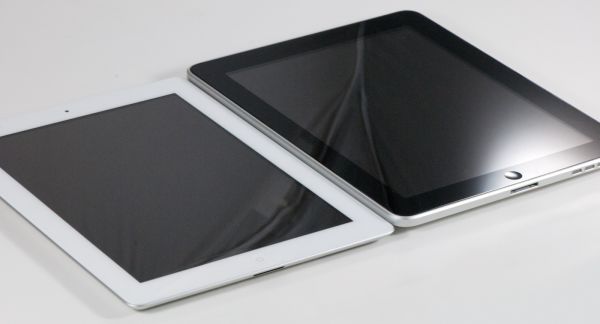
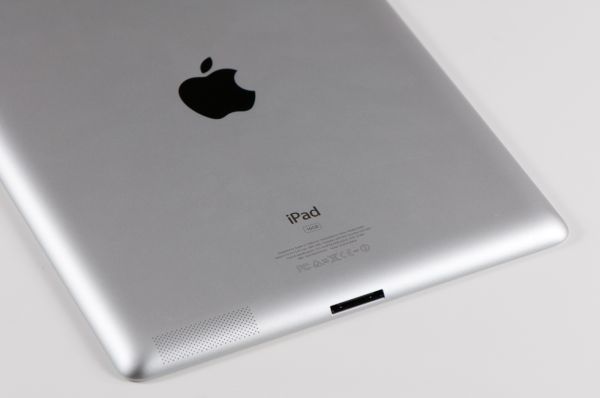
The industrial design has changed pretty significantly, from the convex curvature of the original iPad's back to the flat back of the new iPad. Starting with the iPhone 4, Apple has been moving away from the continuous curvature that dominated their handhelds two or three years ago (think iPhone 3G/3G-S, iPod touch 2G/3G, and the 4G/5G iPod nano) and more towards a flatter and more rectangular design language across the board. The iPhone 4 is the only one that's really angular, but the 4th generation iPod touch debuted the same flatness with more ergonomically friendly curves. The iPad 2 basically carries the iPod touch 4G design language on a larger scale.


The iPad 2 is slightly lighter but easier to hold than the previous generation. Laying in bed and reading is probably where the difference becomes most apparent. The gentle curvature running around the edge makes the in-hand feel surprisingly different, as does the considerably thinner profile. I'm actually shocked at how dramatic the difference is.
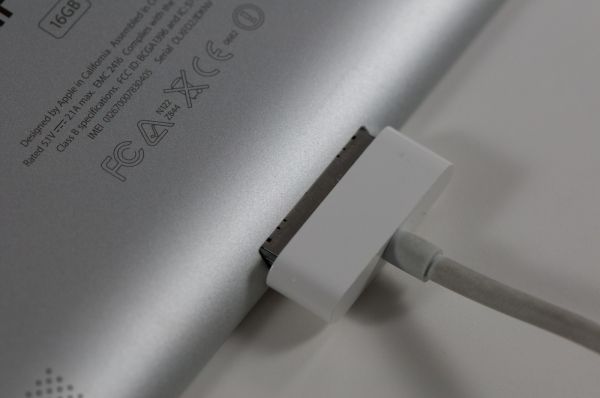
The downside to the very large radius curvature on the outside is that the dock connector is now awkwardly exposed. It's very similar to how the iPod Touch looks, with about 2 mm of exposed connector visible viewed from the back.
The previous generation dock connector was the subject of constant criticism for being way too tight. Apple has over-corrected with the iPad 2 and now the dock connector is too loose. Just browsing the Apple store, I noted several units whose dock connectors appeared plugged in, but had come just loose enough to not charge.
  
When connecting 30-pin dock cables, there's not too much resistance holding the cable in place, and the port itself is difficult to locate without flipping the thing over or viewing it from below.
Another welcome change - the return of the white iDevice. After the no-show that was the white iPhone 4, I was pleased to see Apple ship the white-bezeled iPad 2 on time with no production hitches. I was also wrong about how good white would look. Instead of being overwhelming or busy, the white bezel actually has one notable advantage over black - it doesn't show fingerprints or dust. That alone was what constantly drove me crazy about the previous generation - it always looked dirty. Shockingly, white seems to actually make sense.
  
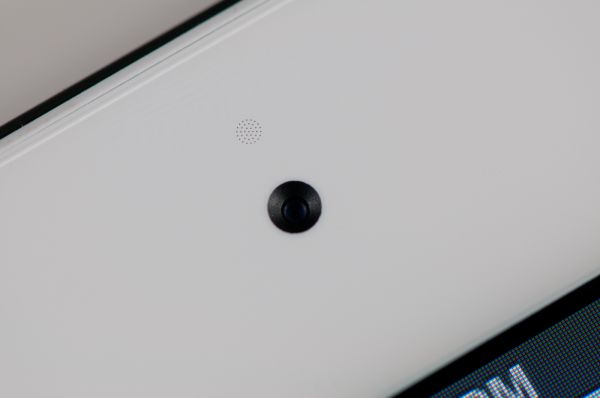
Other hardware chances are the addition of front and rear facing cameras for FaceTime and taking pictures, but unfortunately, they seem to be pieces lifted from the iPod touch and nothing near the iPhone 4's 5 megapixel shooter. We'll talk about what this means for picture quality overall later on in the preview. The switch on the side can now be configured to either be a device silencer or a rotation lock switch, and there is now a large speaker on the bottom right corner of the device.
Overall, the new design really works - the iPad 2 feels good in hand, and instantly makes its predecessor feel a little clunky. But we didn't just pause our testing to talk about design, there's a lot under the hood of the iPad 2 that demands attention.

Samsung Adds New Stars to Android Galaxy

Samsung Adds New Stars to Android GalaxySamsung has further expanded its Galaxy brand of Android devices this week with the introduction of three new handhelds, each running various forms of the Android operating system. It's added the Galaxy S II, the Galaxy Mini and the Galaxy S WiFi as an iPod touch competitor. But will Samsung be able to maintain line cohesion as the Android OS evolves and fragments?
Last year, Samsung put its production of Android devices into full gear and delivered its newly minted Galaxy line.  
Originally just used for its highest-end Android phones, the Galaxy name has branched off to a new tablet product, and now to lower-end smartphones as well as a rival to the iPod touch.

Android, Android, and more Android

Samsung's products on display at this week's Mobile World Congress in Barcelona have one thing in common: Android.
Lots of mobile manufacturers are finding a comfortable home with Google's (Nasdaq: GOOG) open source mobile platform, but as the world's second most prolific maker of phones, Samsung's devotion is especially noteworthy.
At MWC, the Galaxy S II certainly got its share of visitors hoping to get a look at the best smartphone Samsung has to offer.

Galaxy S II

As smartphone screens go, the Galaxy S II's is rather large at 4.27 inches, with 800 by 480 resolution and Super AMLOED technology.
There's also an 8-megapixel camera with the ability to record 1080p HD video.
It's one of the few to support Android's newest smartphone OS, version 2.3 (also known as "Gingerbread"), and an incredibly slim profile of just 8.49mm thick. It's also one of the first phones in the world to have a dual-core chip, and should run apps at a very fast pace.

Galaxy Mini


Samsung Galaxy S II
The Samsung Galaxy S II
Samsung's also expanded the Galaxy brand to a smaller, less powerful smartphone, the Galaxy Mini.
With a 3.14-inch display and just 160 MB of onboard memory, the Mini is designed for users who want a smartphone but don't intend to use its data abilities heavily and don't want to spend as much to purchase the actual handset.
However, the Mini will have an older version of Android installed -- version 2.2 -- and there's no guarantee of getting upgraded.
Meanwhile, the more curious device is the Galaxy S WiFi, which can best be described as a competitor to the iPod touch.
Just like the latter is basically an iPhone without the phone, the Galaxy S WiFi is a top-end Samsung smartphone without a mobile radio.
It can run Android apps, has Samsung's interface and support, and features a large touchscreen.
It's also a way for Samsung TV and Blu-ray player owners to interact with special Android apps without needing a Samsung phone.
Samsung Galaxy Mini
The Samsung Galaxy Mini
Samsung already plans to launch two different versions of the Galaxy S WiFi -- a 4-inch model and a 5-inch model. With the Galaxy Tab rivaling the iPad, and this new media player as a direct competitor to the iPod touch, Samsung is clearly targeting Apple (Nasdaq: AAPL) in the mobile space.

The Galactic Battle

That, said Travis Hodges, Drum Marketing account executive and social media adviser, is the right approach to take.
"Apple knows what it's doing, and it never hurts to mimic the success from other companies," Hodges told LinuxInsider. "By creating brand awareness for the 'Galaxy' name, consumers will begin to look at Samsung's products as devices that are connected to one another. It's important to have that connection on top of just recognizing the manufacturer's name."
One uphill battle is it will never be able to have the same cohesion as all of Apple's products, thanks to the evolving nature of Android. Because Samsung is targeting a wide range of prices with its products, it has to deal with the issue of fragmentation, which has an ugly ring to it. But does it have to?
Samsung Galaxy S WiFi
The Samsung Galaxy S WiFi
"Android fragmentation is never going to go away, but what can change is the reaction to it," Yankee Group analyst Daniel Taylor told LinuxInsider.
"Just look at the PC market," he added. "You would never expect all computers to be running the same version of Windows. Smartphone owners and developers just need to begin look at the Android platform in that same way."
From this week's new products alone, there's already a discrepancy. The Galaxy Mini will have Android 2.2, while the Galaxy S II will have Android 2.3. It's currently unknown when the next smartphone-targeted version of Android will come out and which phones will continue to be upgradeable.

MWC 2011: Android Mania

MWC 2011: Android ManiaWith a few small exceptions, MWC this year was all about Android. It's not so much that Android stole the show -- more like it was given the show. Other platforms were there, of course, but their presence didn't move the needle much compared to ubiquity of Google's mobile OS. How much of an edge did this conference give Android over its rival platforms?
In the past year, Android has managed to replace iOS as the most popular smartphone platform for new purchases, and it even toppled Nokia's (NYSE: NOK) Symbian OS on a global scale, according to at least one report. So it's not surprising that at the Mobile World Congress last week, Android took center stage. What is perhaps surprising, though, is it seemed to actually take almost the entire stage.
The Mobile World Congress is an annual trade show in Europe, and it dates back all the way to 1987. However, since in its earlier years most consumers only wanted a cell phone that could, well, make calls, until recently MWC had remained a rather niche and specialized event.

Android Takes Over the MWC

In more recent years, though, the show has come to be a barometer of the smartphone industry, and it continues to pick up steam. This year, it was the launch pad for a whole bunch of hotly anticipated devices. The Samsung Galaxy S II made its debut, Sony (NYSE: SNE) Ericsson's (Nasdaq: ERICY) Xperia Play was on mass display for the first time, and LG's G-Slate made quite a big splash, to name just a few. A lot of powerful mobile companies were in attendance this year, but there's something curious about all these devices ... they're seemingly all powered by Android.
Sure, other platforms were represented, but the above devices, as well as the Motorola (NYSE: MOT) Xoom and Samsung Galaxy Tab 10.1, not to mention Android developers themselves, were the ones grabbing the biggest headlines.

Apple: There but Not There

It almost seems like a slap in the face, then, that Apple's (Nasdaq: AAPL) iPhone 4 was selected to win the show's Best Mobile Device honor. Cupertino probably could have stolen a lot of attention away from Android at the event, except for the fact that Apple doesn't seem to like to attend shows hosted by other people. As such, it had no official presence at the Mobile World Congress whatsoever.
Research In Motion's (Nasdaq: RIMM) Playbook tablet was on display. However, as a known product that's already been seen up-close at gatherings like CES, it was certainly hard to compete with offerings like LG's G-Slate or Samsung's new Galaxy Tab -- brand new devices that with which the public hasn't had much hands-on time.
And meanwhile, by the time MWC rolled around, HP's (NYSE: HPQ) webOS tablet, the Touchpad, already seemed like old news. It got swept under the rug almost entirely.

Android No Longer Needs to Prove Itself

"Android is poised to absolutely dominate the entire smartphone market. It has reached the point of penetration where consumers may not even really want or be aware that they are buying an Android phone," said Ben Cull, entrepreneur and founder of development company TBODA.
"It has become the de facto mobile operating system. Buying an Android phone these days is like going to the supermarket for detergent and just blindly buying a bottle of Tide," he told LinuxInsider.
Android no longer needs to prove itself, Yankee Group analyst Daniel Taylor told Linux Insider. "At this point, everyone knows what Android is and knows that it does a good job. MWC this year is more about the products. The spotlight should be on LG, Motorola, and Samsung. Advancements in Android aren't huge, but advancements in hardware are."

Windows Phone 7 May Pose a Challenge, Eventually

However, Cull actually has more of a penchant for Windows Phone 7, and he thinks it has the potential to blossom into something big.
"It's still a new entity, and everyone in the mobile space is waiting for it to mature a bit, but [WP7] could definitely start giving Android a run for its money if Microsoft (Nasdaq: MSFT) continues its strong commitment," he said.
If Microsoft can get its act together, maybe next year's MWC will be a bit more interesting on a software standpoint, but for now, it's really all about Android.

WinPho 7 Update Gives Some Phones Fatal Brain Spasm

WinPho 7 Update Gives Some Phones Fatal Brain SpasmUsers of certain Samsung phones running the Windows Phone 7 mobile operating system have complained that a recent software update issued by Microsoft has bricked their handsets. It's likely that the update wasn't thoroughly tested and was failing partway through the installation on the Samsung devices, speculated Chris Hazelton, a research director at the 451 Group.
Microsoft (Nasdaq: MSFT) released its first software update for Windows Phone 7 this week -- and promptly stubbed its toe.
The update reportedly caused problems with Omnia 7 and Focus smartphones, both made by Samsung. Some users complained that the update left their phones "bricked," or rendered completely inoperable.
Microsoft has apparently temporary disabled the update for these devices.
Redmond did not respond to requests for comment by press time, while Samsung Mobile referred questions to company headquarters in Korea.

WinPho7's Wee Update

The update in question is a "relatively small one," according to the Windows Phone blog. It's designed to improve the software update process so that features users want, such as copy and paste, can be installed on their WinPho7 devices.
Microsoft is rolling out the update in phases.
Unlike some other mobile operating system vendors' updates, which are sent over the air, Microsoft took an old-fashioned approach with this update. WinPho7 device owners have to connect their phones to their computers through a USB cable and use either the Zune software for their PCs or the WinPho7 Connector for Mac to install the update.
Users who had previously installed the Zune software or the WinPho7 Connector on their computers previously may have to update those programs before proceeding with the update to WinPho7.

Microsoft's Pain

How could something have gone wrong with the update? Didn't Samsung, like other device manufacturers, work closely with Microsoft to ensure its products work well with WinPho7?
It's likely that the update wasn't thoroughly tested and was failing partway through the installation on the Samsung devices, speculated Chris Hazelton, a research director at the 451 Group. This is corrupting the devices' firmware, he suggested.
"Microsoft just can't catch a break," sighed Maribel Lopez, principal analyst at Lopez Research.
"This speaks to the complexities of having to create software that fits multiple vendors' platforms," Lopez told TechNewsWorld. "Something like this is bound to happen."
Google (Nasdaq: GOOG) doesn't seem to have had a problem with rolling out an operating system that runs on multiple vendors' platforms, though -- there don't seem to be any similar complaints from vendors making Android phones.
"We haven't heard of updates breaking phones using any other mobile OS vendor's platform," Lopez pointed out.
Microsoft will need to reissue the update, but it may hold off and wait until the next major software release, Hazelton told TechNewsWorld.
The reissue may come soon, he opined.

Impact on Microsoft

Microsoft's fallen well behind in the highly competitive mobile phone market, and the delayed debut of WinPho7 didn't help. When it announced earlier this month that it is teaming up with Nokia (NYSE: NOK), which abandoned its own MeeGo and Symbian platforms for the marriage, criticism was raised that it was the wedding of two has-beens -- Nokia has been losing ground steadily in the global mobile phone market itself.
"I would consider this more of an embarrassment than an actual setback," Lopez Research's Lopez said. "You can fix these things, but it's one of those things that you don't want to see in the headlines when you wake up in the morning if you're Microsoft."
On the other hand, the update issue won't deter any hardware vendors who have already committed to WinPho7, Lopez pointed out.
"Updates are difficult processes," the 451 Group's Hazelton said. "This could push back future updates slightly."
On the other hand, the problem might spur Microsoft to leap into the 21st century and begin issuing over-the-air updates like other mobile platform vendors do, Hazelton suggested.
"At this point, the over-the-air update should be a very simple thing," Lopez said.
"My biggest problem with Microsoft right now is that it has a new mobile operating system," Lopez added. "Until Nokia's announcement that it would work with Microsoft, it was unclear whether Windows Phone 7 would be longstanding; now it's unclear whether it's ready for prime time."

Motorola Xoom Designed for Heavy Meddling

Motorola Xoom Designed for Heavy Meddling Teardowns of the new Motorola Xoom tablet reveal a device designed to be easily disassembled -- more easily disassembled, at least, than Apple's iPad. Those who've put the tablet on the dissecting table say this is probably due to the fact that Xooms will be upgradeable to 4G LTE data services, which requires a small hardware swap-out. It'll also require owners to part with their Xooms for the better part of two weeks.
Unlike its arch-rival, the Apple (Nasdaq: AAPL) iPad, the Motorola (NYSE: MOT) Xoom tablet is easy to open up for repairs and upgrades.
"It appears Motorola built the Xoom to be upgraded, so they have this parting line about an inch from the top on the back that lets you separate the device into two pieces," Miroslav Djuric, who tore down the Xoom for iFixit, told TechNewsWorld.
"A large portion of the back cover that slides down just enough to expose the PCIE slot and that lets you swop out PCIE cards and upgrade the device from 3G to 4G LTE," Djuric added.
PCIE stands for PCI Express.
The Xoom also has plastic cards in its SIM card and microSD card slots, Djuric said.
Owners will have to send the devices back to Motorola to have it upgraded to 4G LTE by installing a SIM card. That process will take six business days, but will be done at no charge.
Verizon Wireless has put up a website about upgrading the Xoom to 4G LTE. However, spokesperson Brenda Raney declined comment further.
Motorola Mobility spokesperson Kira Golin referred TechNewsWorld to the Verizon website. 


Twitter Delicious Facebook Digg Stumbleupon Favorites More